


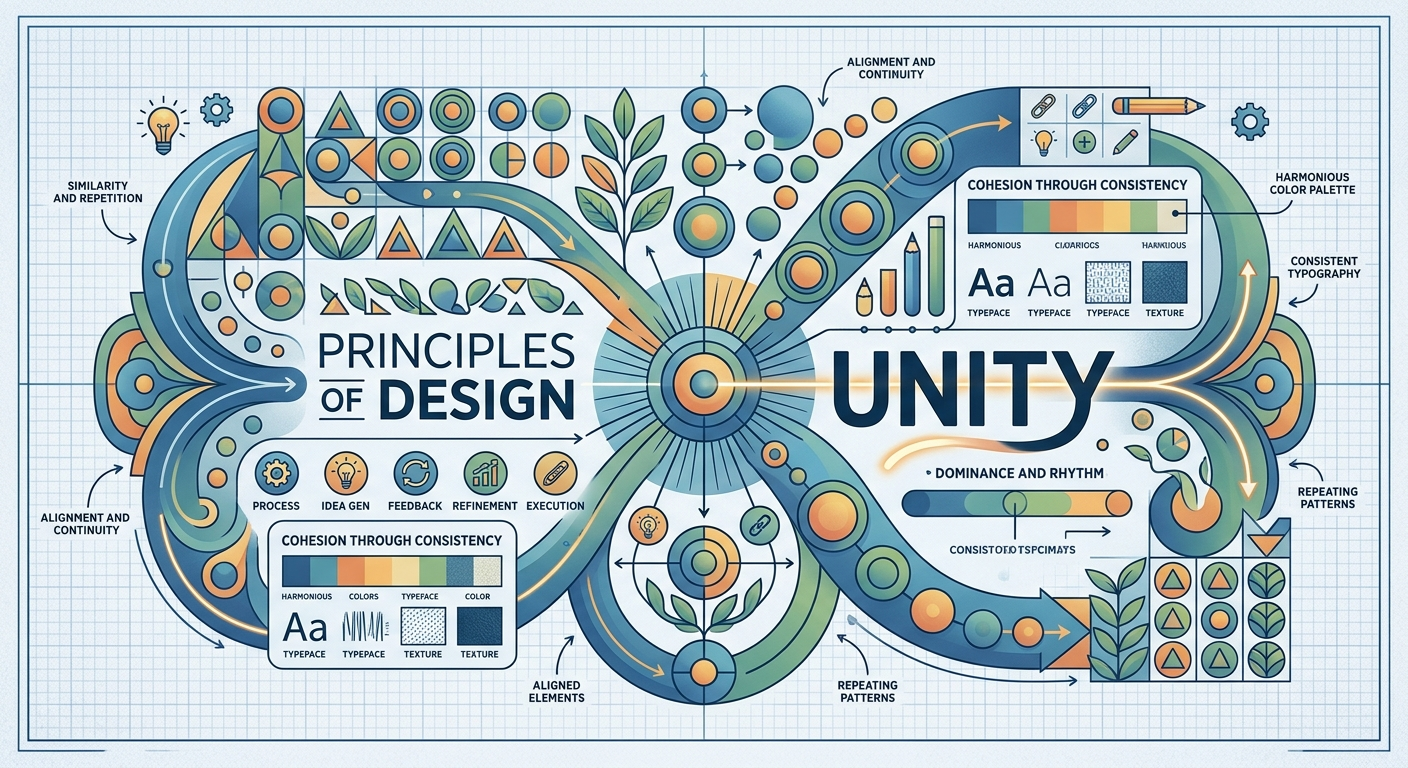
The design unity principles are the skeleton of any cohesive piece of art, bringing things together in a way that looks harmonious instead of chaotic. When we discuss unity in art, we must realize that this principle is not solely for aesthetics; it is what forms a narrative thread to lead the viewer’s experience. The artist can combine the colour, shape and texture of a work of art, into a whole that appeals to the emotions and intellect.
Moreover, unity is not the same as uniformity, but an acknowledgement of the interaction between contrast and harmony. But a work skillfully done can mix styles, with each part contributing to the support of one idea, a demonstration of the pliability of the basic ideas of art unity. This creates a more fascinating piece of art that enables the observer to investigate the nuances therein and enhances not only admiration, but interpretation as well. Ultimately, the use of these principles invites the artist and the audience to uncover links in complexity and open up the talking about the work itself.
Discover 5 Essential Principles Of Design Unity For Stunning Art Creations
One of the most transformative discoveries in the study of the concepts of unity in art is the idea of totality. This principle states that every element in a piece, whether it is color or shape, should tell a story that holds together. This wholeness does not mean that all aspects need to be the same, but that they should speak in concert, forging a fundamental dialogue that steers the viewer’s experience. Artists can place different forms or opposing colours carefully to create a dynamic tension that nonetheless feels unified.
Another important element is the proper use of repetition. Understanding how repeated patterns or motifs can generate a sense of familiarity helps strengthen the emotional connection to a piece. The repetition reinforces the concept and also acts as a visual cue to guide the viewer’s eye through the work. Also consider the power of alignment , intentionally placing pieces in relationship to each other can improve the overall composition , establishing a path for the eye to follow , keeping the work united . Employing these ideas, artists can discover new depths of meaning in their work and craft engaging visual stories.
How To Achieve Unity In Art: 7 Simple Techniques For Beginners
Unity is very important in art for a strong and unified piece of art. A good tactic is to employ a limited color palette. Choosing a few complementary hues will not only make your choices easier but will bring harmony to your picture and easily lead the viewer’s eye through the elements. Also, repeating a shape or pattern elsewhere in your project helps create visual links so it all feels like a cohesive one even if things are separate.
Another strategy is to pay attention to scale and proportion. You can play with the scale of the things in a considered way, where you can keep everything balanced and focus attention on points of interest. Finally, think about the utilization of negative space. Empty space around your subject can be used strategically to accentuate your subject . The eye can rest on the empty space and then focus on the features that you want to emphasize . Empty space helps create a sense of unity . Trying these strategies out may give you new insights and enrich your artistic expression in amazing ways.
The Power Of Unity: Case Study On Iconic Artworks That Inspire
The classic artwork “The Kiss” by Gustav Klimt embodies the transformational power of union, blending love and connection through vivid hues and intricate patterns. In this work Klimt portrays a close hug of two people who appear to merge with one another. Real oneness he implies, is beyond selfhood. The use of gold leaf as an artistic technique produces not only visual magnificence but also signifies the richness of close relationships, inviting us to consider the illumination that unity may bring to our collective human experiences.
Another important example is Diego Rivera’s Man at the Crossroads, which is a strong discussion about unification across socioeconomic groups and ideologies, despite its tumultuous past. Rivera’s art is a bold statement of unity, a testament to the power of solidarity in a fractured world. It uses a variety of characters in the play to show that change is more likely to come from unity than isolation. The audience is left with the notion that a connection just might be a catalyst for tremendous change. These case studies remind us that art is not simply a mirror of unity, but a practice that can create it, and that can inspire us to seek the connections in our increasingly fractured society.
Unity In Art: A Trend Analysis Of Contemporary Design Practices
In contemporary design practice the notion of unity in art is being more and more integrated into a consistent narrative and emotional resonance across different mediums. Designers and artists play with materials and styles, frequently mixing surprising aspects to produce a harmonious whole. The example of synthesizing digital and traditional crafting processes (e.g., 3D printing with hand-weaving) illustrates that technology may strengthen, rather than dilute, the shared experience of creative.
This movement also encompasses efforts that bridge disciplinary boundaries and forge unity in art through collective expression. Collaborative installations, where sculptors, painters and digital artists converge to share their thoughts, challenge traditional aesthetics and invite audience participation in a discourse about interconnection. As customers have moved from things to experiences, the focus on unity becomes a way to bring individual works into the dialog of the greater whole, and enhance the cultural fabric of our age. Contemporary designers, who adopt this holistic methodology, say that true innovation resides not only in the items produced, but also in the shared nuances of the artistic journey.
What Is Unity In Art? An Opinion Piece On Its Vital Importance
Unity in art is not merely a notion, it is the rhythm that holds a work together, so that separate parts operate in harmony. When artists question “what is unity in art?” they are asking about a basic element of human perception. A good song connects with the listening audience; a unified artwork draws the spectator in, inviting the observer to explore and discover deeper meanings. It gives a sense of balance and cohesion, allowing emotions and ideas to flow freely across the canvas, ensuring that every stroke adds to a larger story.
I think the power of unity in art is not only aesthetic – it is necessary to effective storytelling. A disconnected composition can leave viewers bewildered, yet coherence creates connection and engagement. Think about how great filmmakers construct situations where everything, from the conversation to the images, works together to tell a common reality. Similarly, artists who create unity enable their audience to experience art as an adventure in the collective, rather than as a disjointed assemblage of things. In the end, unity is a bridge between the artist’s goal and the viewer’s interpretation. It also reinforces the idea that art is not simply to be seen, but to be felt and understood.

