


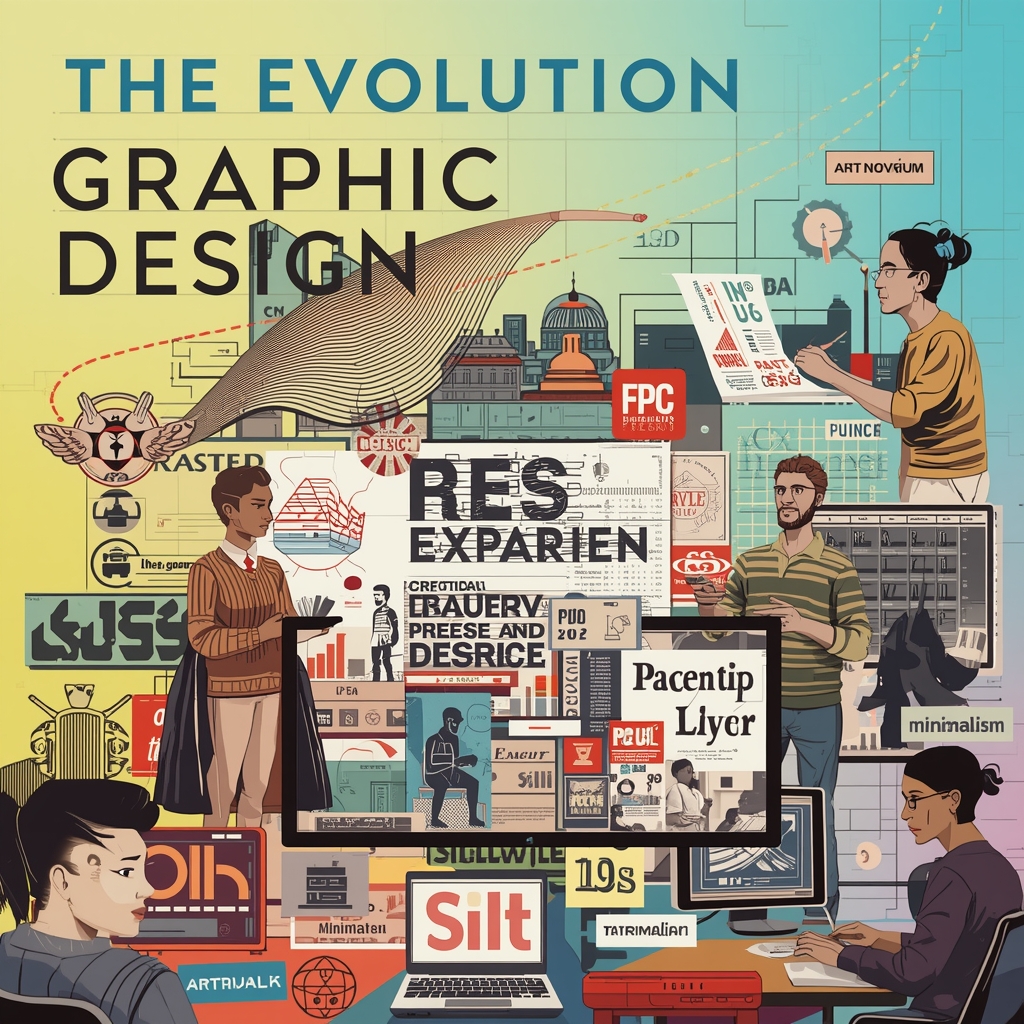
Graphic design changes the way we see and interact with the world. Visual communication has changed over time to accommodate the requirements of people, from ancient cave paintings to modern computer interfaces. Designers may better appreciate the rich history of their art and get ready for the new ideas that will come tomorrow by understanding this progression.
This look into the history of graphic design shows how technology, culture, and human creativity have come together to make the visual language we use today.
The Past: Foundations of Visual Communication
The history of graphic design dates back thousands of years. Symbols, pictographs, and hieroglyphs were utilized by ancient cultures to convey complex concepts. Early attempts to blend text and images for maximum impact can be seen in Roman coins, Egyptian tomb paintings, and medieval illuminated manuscripts.
The printing press, which was invented in 1440, changed the way we communicate visually. All of a sudden, books, posters, and pamphlets could be seen by a lot more people. This technological advance set the stage for the rules of current graphic design.
The Industrial Revolution made advertising very popular. In crowded markets, companies needed eye-catching pictures to set their items apart. The flowing lines and colorful typography of Art Nouveau posters from the 1890s showed how design could be used to promote ideas and things well.
The Bauhaus movement of the 1920s made design a real field of study. Paul Rand and Saul Bass were two designers who showed that beautiful design wasn’t just decoration; it was a way to communicate strategically that could help brands and change people’s behavior.
The Present: Digital Revolution and Accessibility
Graphic design nowadays is very different from what it was like just twenty years ago. Digital technologies have made it possible for anyone with a computer to make graphics that seem professional. Adobe Creative Suite became the norm in the industry. Newer platforms like Canva and Figma have made design easier for people who aren’t professionals.
Design has changed because of social networking. Instagram, Pinterest, and TikTok all want new visual content all the time, which means designers have to work faster and think more carefully about how to get people to interact with their work. Responsive design came about because mobile devices transformed the way people look at pictures.
Nowadays, sustainability is an important factor. These days, designers consider the effects on the environment while selecting eco-friendly printing techniques and developing digital-first advertising strategies. By ensuring that designs are usable by individuals with impairments, accessibility rules broaden the scope of design and increase its societal duty.
Work related to brand identification has become increasingly complex. Businesses are aware that building trust and recognition over all touchpoints, from websites to business cards, requires consistent visual message. This has made graphic design a strategic business tool rather than a support role.
The Future: Technology Meets Human Creativity
The possibilities in graphic design are changing due to artificial intelligence. Automating repetitious activities, generating graphics, and suggesting layouts are all possible with tools like Adobe Sensei and Midjourney. However, AI cannot replace human creativity, which is still necessary for strategic thinking, emotional connection, and cultural understanding.
New design issues are brought about by virtual and augmented reality. Three-dimensional areas, user interaction styles, and immersive experiences are all important factors for designers to take into account. For these new platforms, traditional flat design ideas must be modified.
The level of personalization will advance. With the application of machine learning algorithms, designs will be able to adjust to the tastes of each individual user, increasing the effectiveness and targeting of visual message.
Innovation in sustainable design techniques will be fueled by environmental concerns. While physical design efforts will prioritize recyclable materials and low waste production, digital-first approaches will continue to expand.
Essential Resources for Design History
A well chosen history of graphic design For professionals and students alike, a PowerPoint presentation can make these ideas come to life. Audiences can better grasp how aesthetic decisions were affected by cultural changes by viewing visual timelines that illustrate the evolution of design.
These subjects are covered in detail in a number of great resources. Key movements, significant designers, and technological advancements are all thoroughly examined in a book on the history of graphic design. High-quality copies of well-known designs are frequently included in these publications, which makes them useful resources for inspiration and instruction.
Looking Forward: Design’s Continuing Evolution
The development of graphic design demonstrates the ongoing interaction of cultural ideals, technological prowess, and human needs. In contrast to today’s digital tools, earlier innovations like offset printing and changeable type look archaic, but they addressed comparable issues of visual appeal and mass communication.
Present-day designers are at yet another turning point. Unprecedented creative opportunities are presented by new technology, and more careful approaches to visual communication are required as social responsibility grows.
Designers that embrace new tools and techniques and are aware of this historical background will be the ones of the future. Graphic designers may continue to influence how people see and comprehend the world by learning from the past, becoming experts in the present, and becoming ready for the challenges of the future.

