


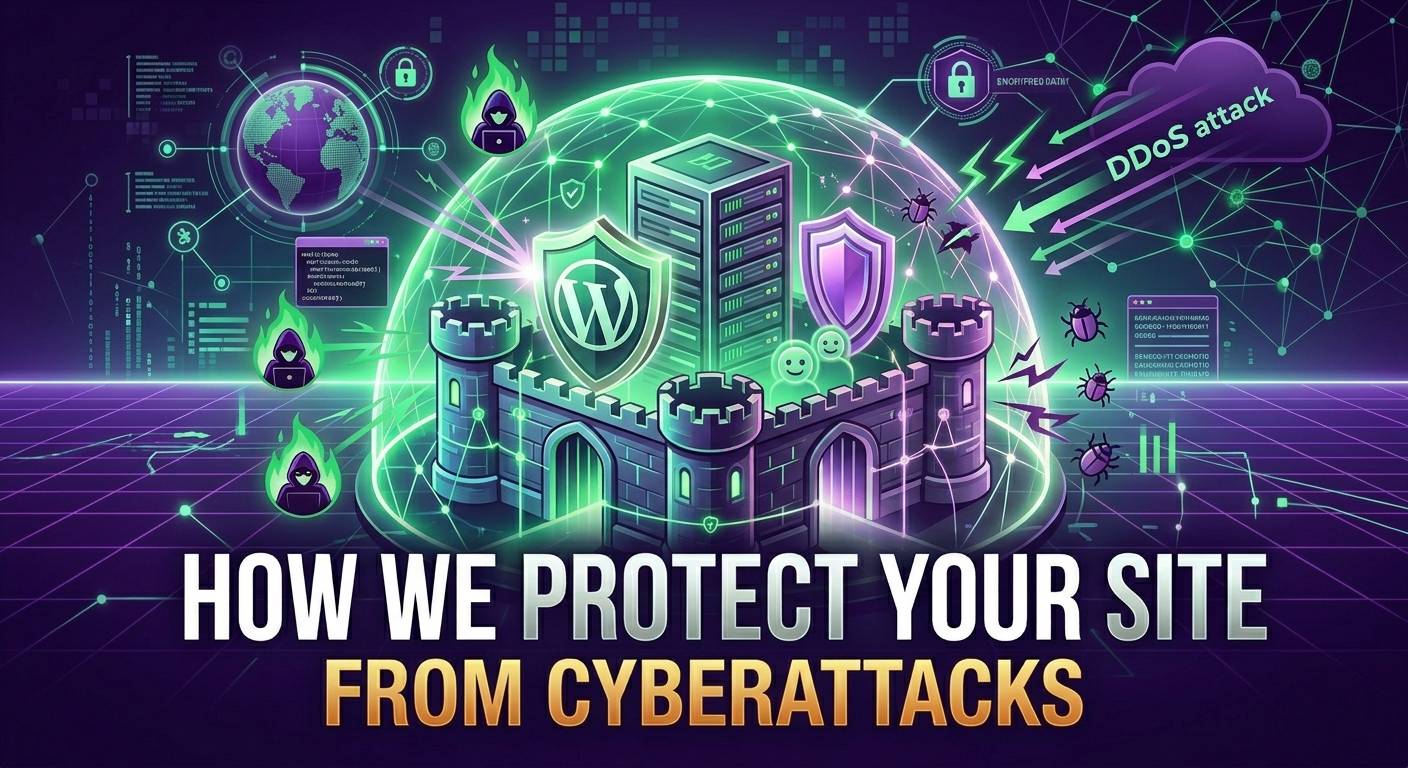
Quick answer: We secure your website from cyberattacks with a multi-layered approach that features web application firewalls, automatic software updates, ongoing monitoring, encrypted connections, and frequent security assessments. This eliminates risk, meets compliance regulations, and keeps your data and consumers safe.
Cyberattacks are no longer just a threat for big companies. Small and medium-sized websites are commonly the targets, as they have lesser defences. One breach can cost you your customers’ confidence, sensitive data and a lot of money.
So keeping your website safe is not optional. In this piece, we’ll talk you through exactly how we protect your site against threats, help you to stay compliant, and reduce your overall cyber security risk – so you can focus on operating your business.
What threats does a website face?
There are many different attacks on websites. Knowing what you’re fighting against makes it easier to see why each layer of defence matters.
- Malware and Ransomware: Malicious code which can steal data or lock you out of your own website.
- DDoS Attacks – Overloading Your Website with Bogus Traffic.
- SQL injection: exploiting flaws in your database to get to confidential information.
Brute-force assaults : Repeated login attempts to guess passwords and acquire access. - Phishing: Fake pages or messages that try to deceive people into giving out sensitive information.
How we protect your website for cyber security
We are not dependent on one tool. Rather, we have numerous layers of defence, so even if one fails, others are still on alert.
Web application firewall (WAF)
A web application firewall is a filter between traffic and your site. It stops dangerous requests (such as SQL injections and cross-site scripting) before they even reach your server.
Encrypted connections with SSL
All sites we manage use SSL encryption (the padlock in the browser bar). This scrambles data as it goes from your site to your users, so it becomes useless to anyone who intercepts it.
Automatic updates and patching
One of the most common ways attackers get in is through outdated software. We automatically update your core platform, plugins and themes, fixing security gaps as soon as solutions are available.
Continuous monitoring
Our systems monitor your site 24/7. We move quickly to investigate and take action before any damage is done, if we notice anything unexpected, such as a sudden surge in traffic or a series of failed login attempts.
Regular backups
Backup is your safety net. In the worst case you have backup. We keep off-site backups of your website so that it can be restored with as little downtime as possible.
How we help you meet cyber security compliance
A lot of firms have to comply with data protection regulations such as GDPR, PCI DSS or HIPAA. Failure to meet them could mean a hefty fine and legal consequences.
We help you to stay compliant by:
- Encrypt sensitive data in transit and at rest.
- Keeping detailed access logs for accountability.
- Having strong access restrictions so only those who are authorised can make changes.
- Conduct regular security audits to confirm that your site is up to current requirements.
Compliance is not a one-time job, it’s continual. We maintain your protections consistent with new regulations as they emerge.
How we reduce your cyber security risk
Strong security is reducing risk to the minimum level. In addition to the methods above, we bolster your defences with:
- Enforce strong password regulations and two-factor authentication for all logins.
- Role-based permissions so users only see what they need.
- Vulnerability scanning to find vulnerabilities before they may be exploited.
- Staff awareness suggestions – as human mistake remains a primary cause of breaches.
All of these steps cumulatively reduce the openings that an attacker might exploit.
Keeping your website safe for the long run
Your protection should keep pace with the ever-shifting cyber threats. We provide your website with a multi-layered security that includes firewalls, encryption, monitoring, backups and compliance assistance.
The ideal time to protect your site is before it gets attacked. If you’d like a review of your present setup, or want to know how we can make your defences stronger, contact our team now.
Frequently asked questions
How much does website security cost?
The cost will be determined on the size of your site and the amount of protection you want. Hosting plans often include common features like SSL and updates, while more complex monitoring, firewalls and compliance support are usually available as an add-on or as part of a managed security bundle.
How long does it take to secure a website?
Basic safeguards like SSL, firewalls and automated updates can be put up in a day. But total security is a process, ongoing, including constant monitoring, periodic audits and changes over time.
Can a small website really be a target for cyberattacks?
Yes. Attackers often target small Web sites because they often have poorer defences. Many attacks are automated and look for any susceptible site on the web, no matter its size.
What’s the difference between cyber security and compliance?
Cyber security means the technical steps which defend your site from threats. Compliance implies adhering to legal and industry regulations, such as GDPR or PCI DSS, for data management. Strong security is a factor in compliance, but they’re not the same.

